
“Should we build our own team or outsource?”
If you’re running a growing business, chances are you’ve asked yourself this question at 2 AM while staring at your phone with a cup of cold coffee next to you.
Here’s the truth, every business that starts growing comes to this point. You’re getting more customers, your phone keeps ringing, and suddenly, your small team can’t handle everything anymore.
But here’s what many business owners don’t see: this isn’t just about hiring an outsourcing company or building a team. It’s really about knowing what your business needs and what will help it grow.
In this guide, I’ll simply explain both in-house and outsourced call centers: what they cost, how much control you get, how flexible they are, and which one might be better for your business. Because honestly, there’s no single “perfect” choice for everyone.
Let’s get started.
What is an in-house call center?

An in-house call center means your own team handles all customer calls, questions, and support. You hire the people, train them, manage them, and they either work from your office or from home under your guidance.
How it works:
You set up the equipment, hire agents, train them, check their performance, and manage all the daily work yourself. You have full control, from the scripts they use to how they handle customer data.
Quick pros of in-house:
- You have complete control over quality and how your brand sounds.
- You get instant feedback and can make changes quickly.
- Data stays safer since everything is inside your company.
- Your team really understands your product or service.
- No outside company talks to your customers, it’s all you.
Quick cons of in-house
- Costs are high, because of hiring, training, and setting up tools.
- You still pay salaries even when business is slow.
- Finding and keeping good agents can be tough.
- It takes time to build a skilled team.
- Scaling up or down (adding or reducing staff) is slow and costly.
What is an outsourced call center?

An outsourced call center means you hire another company to handle your customer calls and support. You don’t have to hire, train, or manage the agents yourself, the outsourcing company takes care of everything.
How it works:
You team up with a service provider like AM2PM Support. They already have trained agents, the right tools, and systems in place. You just tell them what you need, and they do the job. You simply pay for the service you use, nothing more.
Quick pros of outsourced:
- Lower costs, because you pay only for what you use.
- Easy to scale, so you can easily add or reduce agents whenever needed.
- No stress about hiring or training.
- Get skilled and experienced agents from day one.
- Can offer 24/7 customer support easily.
- Faster setup so you can start almost right away.
Quick cons of outsourced:
- Less direct control over how agents work.
- Data safety risks if not managed properly.
- Quality may vary between different vendors.
- Communication gaps or cultural differences can happen.
- Agents may not know your brand or product deeply.
In-house vs outsourced call centers: Key differences
Let’s keep it simple and see how both options stack up side by side, based on what really matters for your business:
| Factor | In-House Call Center | Outsourced Call Center |
| Cost Structure | High setup cost + regular salaries | Pay only for what you use (usage-based) |
| Control Over Operations | Full control over quality and processes | Shared control, managed by the vendor |
| Scalability | Slow and limited — takes months | Super flexible — can scale instantly |
| Training & Development | You train and manage your team | Vendor trains and manages their team |
| Technology & Tools | You buy and maintain everything | Usually included in the service |
| Availability | Works only during your business hours | Can offer 24/7 customer support |
| Hiring & Attrition | You handle all hiring and replacements | Vendor handles hiring and replacements |
| Data Handling | You have full control over data | Vendor manages data (with legal agreements) |
| Time to Launch | Around 2–3 months | Usually 2–3 weeks |
| Fixed vs Variable Costs | Mostly fixed (salaries, rent, tools) | Mostly variable (pay-as-you-go) |
Advantages of in-house call centers
Full control over quality & brand messaging
When your team works inside your company, you control every call and every conversation. There’s no middleman. If a customer gets confused, your manager can step in right away and fix it.
This is great for brands that care a lot about quality and consistency. If your customer experience is your biggest strength, then having your own team makes perfect sense.
Easier brand alignment
Your agents are part of your family. They join your meetings, understand your culture, and know your product inside out. So when customers call, they speak with someone who actually cares about your brand, not just someone reading a script.
Example: A SaaS founder I know spent months training her own support team about her product. The result? Customers felt they were talking to real experts, not robots, and that became her secret advantage.
Tired of missed calls and unhappy customers?
Let AM2PM Support handle your customer care while you focus on growing your brand.
Faster feedback loop & quick changes
If you want to change something about how calls are handled, it’s super easy. You can talk to your manager today, and your team starts doing it tomorrow. In outsourced setups, you’d need meetings, approvals, and time.
Full control over data & privacy
If your business deals with private or sensitive data, having an in-house team keeps it all safe within your company. You decide how data is handled, and you’re fully in charge of security and compliance.
Advantages of outsourced call centers
Cost efficiency (this is the big one)
Let’s get real: building an in-house team is expensive. Here’s what you’re actually paying for:
- Hiring and recruitment costs
- Salaries (even in low months)
- Training and onboarding
- Benefits and HR overhead
- Office space or equipment
- Technology and tools
- Management and supervision
With outsourcing, you pay for what you use. High season? You scale up. Low season? You scale down. No monthly salaries keeping your CFO up at night.
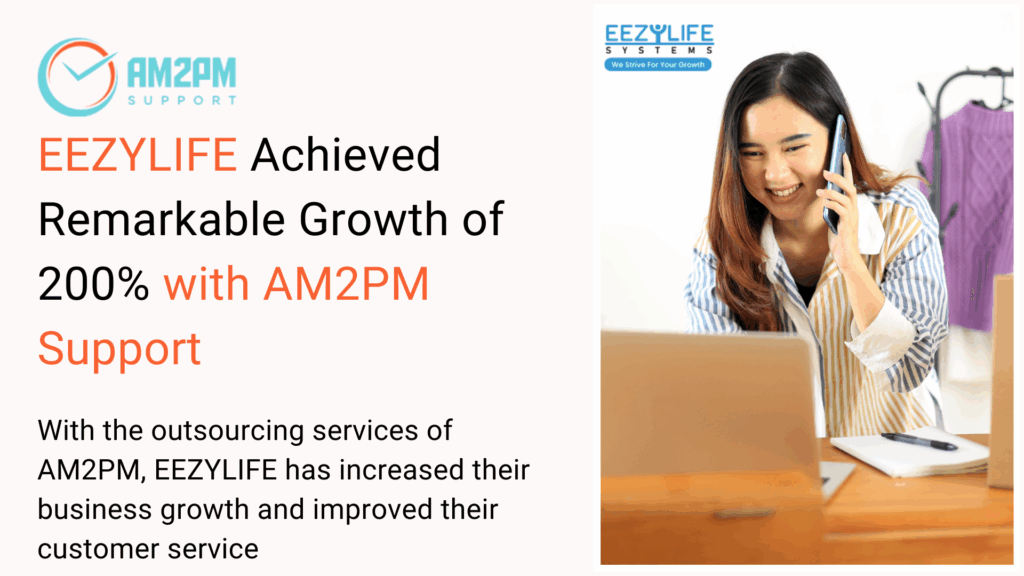
One of our clients, EEZYLIFE (an e-commerce solutions company), was spending a fortune managing fluctuating agent demands. When they switched to outsourcing with AM2PM Support, they eliminated the need for constant hiring and training cycles. Result? Better consistency, lower costs, and a 200% growth in their cold calling channel within 5 months.
Instant scalability
You just got featured on a major news site. Tomorrow, call volume will be 5X. In-house? You’re panicked. You don’t have 10 more trained agents ready.
Outsourced? You call your vendor in the morning. By the evening, more agents are on board. It’s that simple.
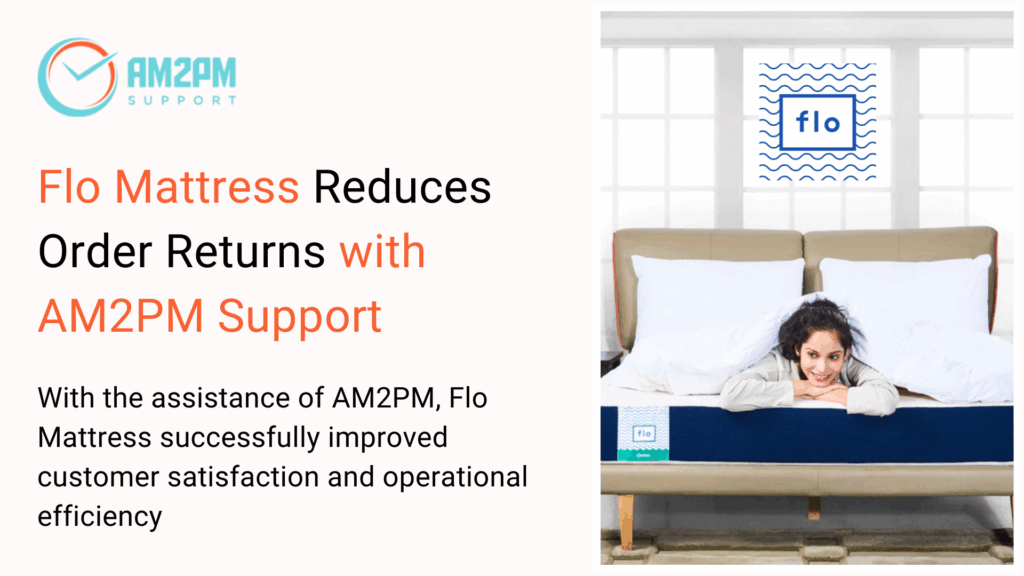
Case in point: Flo Mattress needed to handle massive fluctuations in call volume during peak seasons and holidays. Managing this with full-time employees would have drained their budget. With AM2PM Support, they could adjust agent capacity with just a 15-day notice, scaling up during peak times and scaling down during lean periods. Result? 35% reduction in salary costs and better service.
Expert agents & no attrition headaches
A good call center vendor has experienced, trained agents. They’ve handled hundreds of calls. They know how to de-escalate angry customers. They understand different industries.
Plus, if an agent leaves? That’s the vendor’s problem. They replace them, retrain, and move on. You don’t lose sleep over it.
24/7 support without burning out your team
Want to offer round-the-clock support? In-house, you’d need to hire night shift workers, manage shift rotations, and deal with exhausted employees. Outsourced vendors already have this infrastructure. They operate 24/7 as a standard.
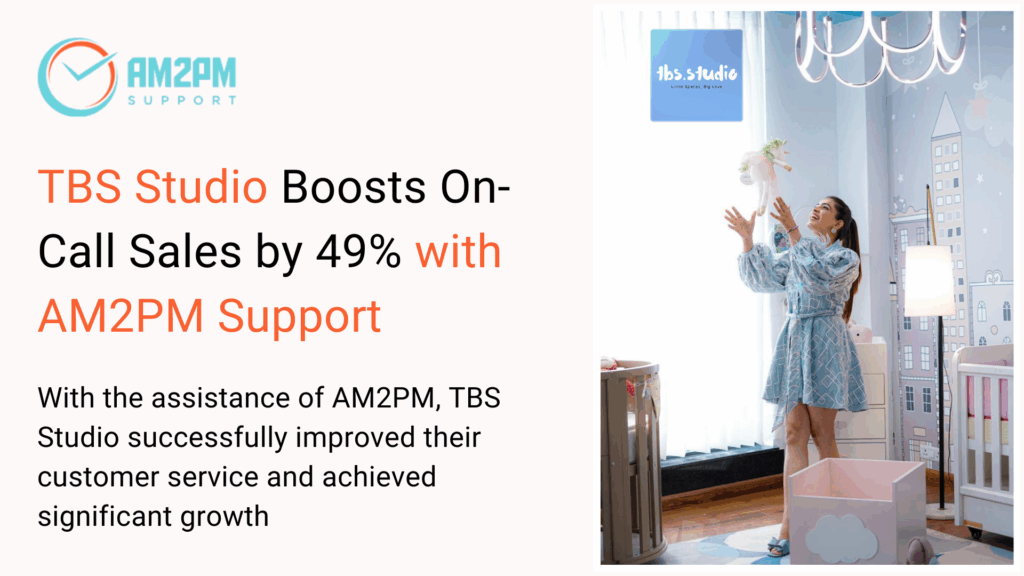
Real example: TBS Studio (a baby furniture brand) needed 7-day availability to handle customer queries. Their in-house team couldn’t do it. With AM2PM Support outsourced call answering services, they now have consistent support 7 days a week, with their inbound call connectivity improved to 95%.
Flexibility & no minimum commitments
Most good outsourcing vendors don’t force you into long-term contracts with minimum agent requirements. You can start small, maybe just one agent for inbound support and scale up as you grow.
Quick implementation
Set up an in-house team? 2-3 months minimum. Set up outsourced support? 2-3 weeks. You’re taking calls from customers this month, not six months from now.
When to choose in-house vs outsourced

Choose in-house if:
✅ You handle highly sensitive or complex issues (healthcare, finance, legal, data security)
✅ Your brand positioning depends on a specific voice or approach that’s hard to replicate
✅ You have stable, predictable call volumes (no major fluctuations)
✅ You’re large enough to justify fixed staffing costs ($50K+ monthly)
✅ Your product is so complex that 6+ months of training is normal
✅ You have a mature business with strong systems and processes in place
Choose outsourced if:
✅ You’re a startup or growing SMB with unpredictable call volumes
✅ You need to scale fast without huge upfront investment
✅ Your call center needs are seasonal or variable
✅ You want to focus on product, sales, or strategy, not HR and training
✅ You need 24/7 support but don’t want to build overnight teams
✅ You want to test call center operations before building in-house
✅ You’re in e-commerce, SaaS, logistics, or similar industries with high transaction volume
Scaling fast and need reliable call support?
AM2PM Support helps eCommerce brands manage customer calls, chats, and returns, effortlessly.
Real-world examples: What actually happened
Let’s skip the theory for a second and look at what really happens when businesses outsource, all with real numbers and real results.
Example 1: E-commerce brand scaling fast
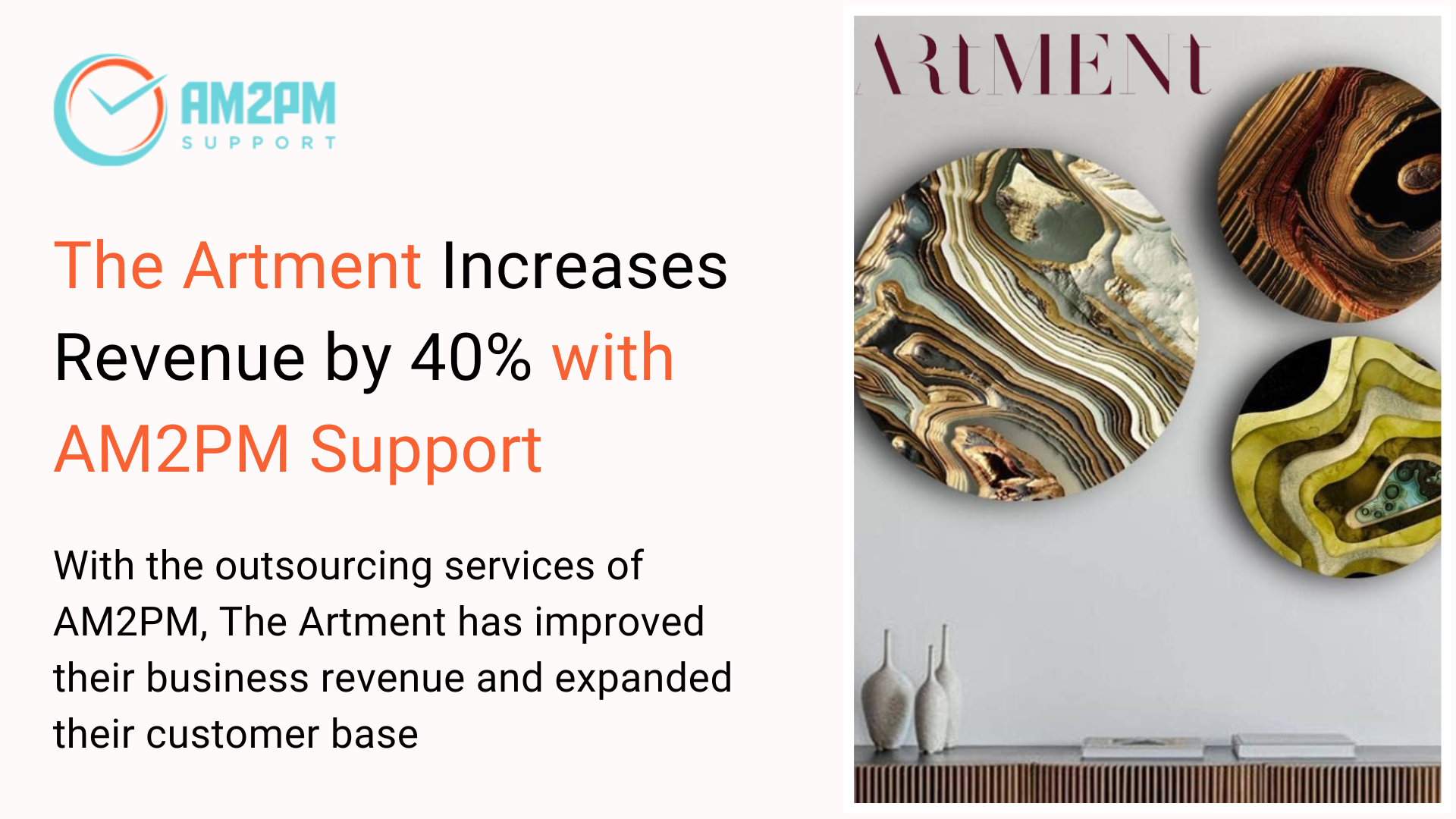
The Artment (luxury home decor e-commerce) faced a typical problem: abandoned carts were costing them money.
They needed:
- 7-day availability for inbound support
- Dedicated abandoned cart calling
- Quick response times on chat
Here’s what happened when they outsourced:
- Inbound call connectivity improved to 95% (was much lower before)
- First response time on chat dropped to 2.5 minutes
- Revenue from abandoned carts increased by 40% with an 18% conversion rate
- Cost savings of 40% on salary expenses
That’s not theory. That’s actual revenue and actual savings.
Example 2: Bike rental service exploding
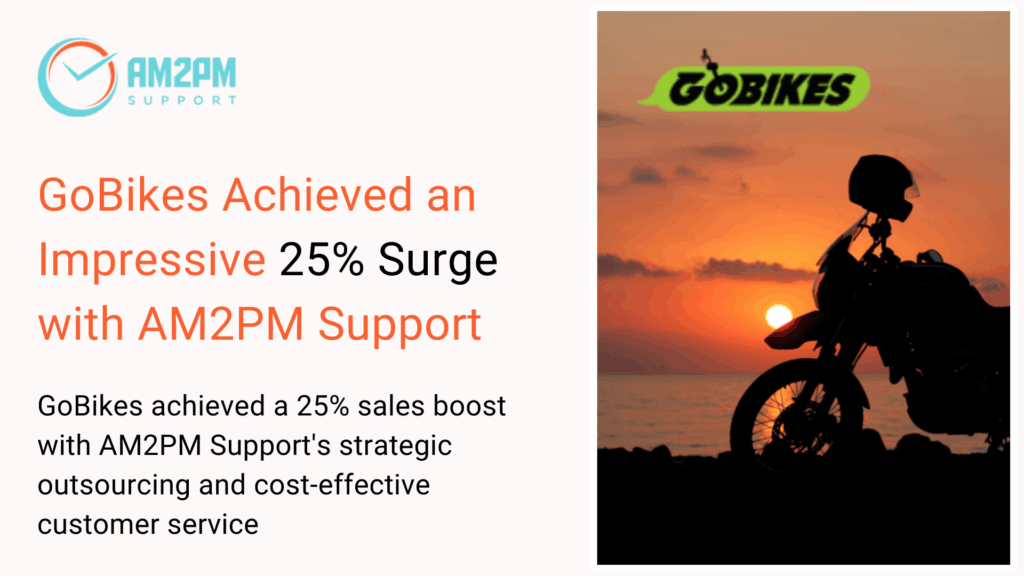
GoBikes needed more sales-oriented calls and better customer service. They couldn’t hire and train fast enough.
What AM2PM Support did:
- Provided flexible, experienced agents
- Implemented backup systems for when internal teams were on leave
- Focused on lead qualification and sales acceleration
The results:
- Call pickups increased from 74% to 95% in one month
- Sales increased from 12% to 25% through IVR calling strategies
- Founders could focus on growth instead of managing calls
A hybrid approach: Mix and match what works best

Here’s a secret most business owners don’t realize, you don’t have to choose just one.
Many successful companies use a hybrid model that combines the best of both:
- In-house for inbound support (where your brand voice and personal touch matter most)
- Outsourced for outbound or sales calls (where you need more volume, speed, and flexibility)
Or even:
- In-house during office hours (for full control and brand alignment)
- Outsourced after hours (so customers get help 24/7 without paying for costly night shifts)
Overwhelmed by customer queries and returns?
AM2PM Support takes care of your calls, emails, and chats, so you can focus on sales.
Or:
- In-house for VIP customers (giving them that white-glove experience)
- Outsourced for regular support (to stay efficient and save costs)
???? The takeaway? It’s not an “either/or” decision. You can start small with outsourcing, see what works best, and then build in-house where it truly adds value.
Key questions to ask yourself before you decide

What’s my monthly call volume?
Low and stable (under 500 calls/month)? In-house might work. High and variable (1000+)? Outsource.
How critical is brand voice and control?
Super critical? Build in-house. Somewhat important? You can outsource with proper training.
Can I afford the wait?
Need customer support running in 3 weeks? Outsource. Have 3 months to build? In-house is an option.
Want your customers to love every interaction?
AM2PM Support’s trained agents ensure quick, friendly, and consistent communication, every time.
What’s my current team size?
Tiny team (under 10)? Focus on core business, outsource support. Larger org (50+)? You might have capacity to build in-house.
What are my seasonal variations?
Huge differences between peak and lean season? Definitely outsource. Stable year-round? In-house is more feasible.
How much am I currently losing due to missed calls?
If it’s costing you money, outsourcing ROI becomes obvious fast.
The numbers that matter: Cost comparison

Let me break down realistic costs (India-based, 2024):
In-house call center setup (monthly costs):
- 5 trained agents @ ₹15,000/month each: ₹75,000
- Team lead/supervisor: ₹30,000
- Infrastructure & tools: ₹15,000
- Training & development: ₹10,000
- HR overhead: ₹5,000
Total: ₹135,000/month minimum (Plus initial 2-3 month ramp-up before you’re even operational)
Outsource call center (pay-as-you-go):
- Inbound support: ₹40-60 per call
- Outbound calling: ₹30-50 per call
- Average cost per minute: ₹8-12
For 500 calls/month with average 4-minute duration = roughly ₹16,000-24,000/month
The difference? ₹110,000 per month in savings. In a year, that’s ₹13.2 lakhs.
Sure, in-house might make sense if you have massive volume and stable demand. But for most growing businesses? The math heavily favors outsourcing initially.
So… what’s the right call for your business: In-house or outsourced call center?
After everything we’ve covered, the truth is simple, there’s no one “best” option. It’s about what fits your business right now.
If you’re a small startup with limited funds, outsourcing is the smarter choice, and you can save that money which you can use to grow your product.
If you’re a mid-sized company with growing customer needs, try a hybrid model: some in-house, some outsourced.
If you’re a large enterprise, you’ll probably need both, maybe even your own dedicated center.
Here’s what the data shows:
- Outsourcing gets your customer support running 3x faster
- You can scale 10x easier when demand spikes
- You save 30–50% in operational costs
- And you get to focus on what truly matters: growing your business
So ask yourself:
???? “What would I do with the time and money I’d save by outsourcing?”
If that thought excites you, it’s time to take the next step.
At AM2PM Support, we help businesses like GoBikes, EEZYLIFE, Flo Mattress, TBS Studio, and The Artment build efficient, 24/7 customer support that scales smoothly. Whether it’s inbound, outbound, abandoned cart recovery, or round-the-clock support, we’ve got the experience to make it work.
Ready to explore what outsourcing can do for your business?
Book your free call and let’s talk. No pressure, just a friendly conversation about what’s right for you.
Frequently asked questions: In-house vs outsourced call centers
An in-house call center means you have your own team of people who handle customer calls from your office (or from home under your management). You take care of everything: hiring, training, tools, and daily work. You have full control, but also full responsibility.
Outsourced call center services mean you hire another company to handle your customer calls. They already have trained agents, tools, and systems. You tell them what you need, and they manage everything for you. You just pay for what you use.
Outsourcing helps you:
– Save 30–50% in costs
– Start quickly (in 2–3 weeks)
– Get 24/7 customer support
– Avoid hiring or training staff
– Work with experienced agents
– Scale your team up or down anytime
Not exactly. BPO (Business Process Outsourcing) is a big category and it includes things like data entry, accounting, customer service, and more.
A call center is just one part of BPO that focuses on handling customer calls.
So, all call centers are BPOs, but not all BPOs are call centers.
Choose in-house if you have stable, high call volumes (1000+ monthly), handle sensitive data, need deep brand alignment, have the budget to support fixed salaries, and have time to build systems. Choose outsourced if you’re scaling fast, have variable demand, need quick implementation, or want to keep costs variable.
Pricing varies by vendor, but typically ranges from ₹30-60 per call for outbound, ₹40-80 per call for inbound, or ₹8-15 per minute. Many vendors offer flexible models where you pay only for what you use, making it cost-effective for growing businesses.
Yes! Many companies start with outsourcing when they’re growing, then build a small in-house team later. It’s a smart and flexible way to test what works best.
Typically 2-3 weeks from initial consultation to going live. That includes understanding your needs, selecting agents, doing initial training, and setting up processes. Much faster than building in-house (which takes 2-3 months minimum).
No problem. Most outsourcing companies already offer 24/7 customer service. You just have to tell them your timings, they’ll handle shifts and coverage for you.
Good vendors run quality checks, call audits, regular training, and performance tracking. At AM2PM Support, for example, we audit 100% of calls and give agents feedback regularly to make sure your customers always get the best service.