

The cold hard truth: Your customers are already gone
Before you read any further, think about this truth: 56% of customers have to explain their problem again because your customer support channels are disconnected. Right now, while you are reading this, frustrated customers are leaving your brand after just one bad experience, and half of them will never come back.
The challenge for many businesses is that managing multiple channels in-house requires significant resources, training, and technology. Without specialized support teams, customers often face delays and repeated explanations, which drives them away.
But here is a chance you can take: Companies using true omnichannel customer service are seeing 67% customer satisfaction, compared to just 28% for fragmented multichannel approaches. They are keeping 89% of their customers, while single-channel businesses only keep 33%. These companies also see revenue growth that is 23% higher than their competitors. (Source: Magenest)
Now, the question is not whether you need omnichannel customer service, it is whether you can afford to ignore it any longer.
What is omnichannel customer service?

Omnichannel customer service is a way to connect all customer touchpoints through phone, email, chat, social media, and in-person help for a better, smooth and personalized customer service. Unlike traditional multichannel approaches, where each channel works on its own, omnichannel makes sure customer information, conversation history, and preferences move easily between channels.
For example, if a customer starts talking on live chat, then sends an email, and finishes with a phone call, your agents can see the whole conversation. There is no need for the customer to repeat themselves, start over, or get frustrated.
The main idea is simple: customers should not have to change how they communicate to fit your business, and at the same time your business should adapt to how customers naturally communicate. Businesses that outsource omnichannel support can achieve this level of service without the burden of managing multiple internal teams.
Comparison: Omnichannel vs multichannel vs traditional customer service
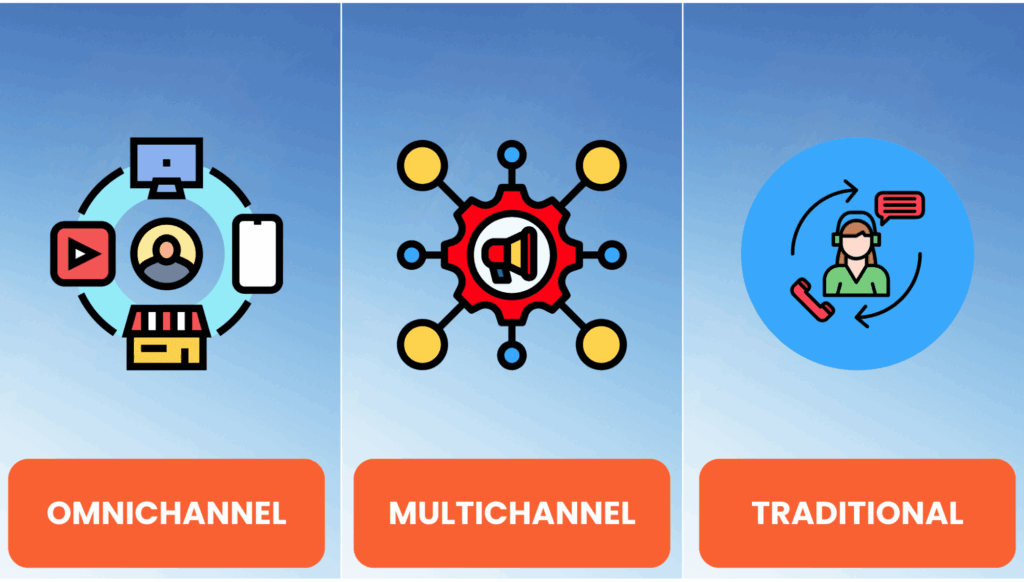
Most business leaders think they’re providing omnichannel service when they’re actually delivering fragmented multichannel experiences. Here’s the critical difference:
| Type | How It Works | Cost Implication | Customer Experience | Example |
| Traditional | Each channel works separately | High acquisition costs | Customers often repeat themselves, slow problem solving | Phone support only |
| Multichannel | Multiple channels exist, but they don’t share information | Moderate efficiency | Customers can choose channels, but still repeat information | Phone + email + chat, but each channel is separate |
| Omnichannel | All channels are connected and share customer info | Lower cost, higher retention | Smooth, continuous experience; no repeated explanations | Chat → email → phone; agents see the full conversation |
Managing omnichannel internally requires dedicated staff, technology, and training. Outsourced teams are already equipped to handle multiple channels, maintain conversation history, and deliver seamless experiences efficiently.
The financial reality:
Getting a new customer costs 5–7 times more than keeping an existing one. Yet, many companies are losing customers because of poor support experiences, problems that could easily be avoided with better, omnichannel service.
In short:
- Traditional = slow, frustrating, and costly.
- Multichannel = better, but still disconnected and inefficient.
- Omnichannel = smooth, customer-friendly, and cost-efficient.
Outsourcing allows companies to access omnichannel expertise without investing heavily in internal infrastructure, saving both time and money.
Key benefits of omnichannel customer service
The benefits of omnichannel customer service go far beyond smoother conversations. They directly impact customer happiness, loyalty, and your bottom line.
Improved customer satisfaction and loyalty
67% of customers have switched brands because of poor service. With omnichannel customer service, you give them a reason to stay. Loyal customers also drive 30% higher lifetime value. (Source: Yaguara)
Reduced resolution times
Omnichannel cuts wait times by 39%, so issues get solved faster and customers stay happier. Outsourced agents are trained to provide fast, consistent responses across all channels, improving customer satisfaction.
Increased revenue
Businesses using omnichannel see 5–15% revenue growth, and on average, 23% higher growth than competitors. They also enjoy 13% higher order values.
Better agent productivity
Agents don’t waste time asking customers to repeat themselves. With full context, they can focus on solving problems quickly. Specialized outsourced teams are equipped to handle multiple channels efficiently, improving productivity even further.
Struggling to keep up with customer queries?
Let AM2PM Support handle your omnichannel support with trained agents, smart tools, and seamless processes.
Cost reduction
Omnichannel service reduces support costs by up to 35% by cutting duplicate work and increasing efficiency.
Industry-specific benefits:
- Retail → higher repeat purchases.
- SaaS and services → faster problem resolution and stronger retention.
- E-commerce → bigger cart sizes and fewer abandoned orders.
In short: Outsourced omnichannel teams deliver all these benefits without requiring your business to build internal infrastructure from scratch.
Essential components of omnichannel customer service
To truly succeed, you need the right building blocks in place. A good omnichannel customer service system isn’t just about adding more channels, it’s about making them work together.
Here are the essential components every business should focus on:
Unified customer database
All customer information either from phone calls, chats, emails, or social media is stored in one place. This gives agents a complete view of the customer’s history, preferences, and past conversations. Outsourced teams use centralized systems to maintain continuity across channels and avoid data silos.
Real-time channel integration
Customers can move smoothly from one channel to another (like chat → email → phone) without losing context. The omnichannel customer service solution ensures that agents see the full conversation across all touchpoints.
AI-powered routing and automation
Smart systems decide where to send each customer request. High-value customers or urgent cases can be routed to senior agents, while simpler issues can be solved instantly by AI chatbots. Many outsourcing providers combine AI with human agents for faster, smarter responses.
Want happier customers without the extra workload?
AM2PM Support delivers connected, multi-channel support so your team can focus on growth.
Consistent knowledge base
A shared library of answers makes sure customers get the same, correct information no matter which channel they use.
Performance analytics and optimization
Real-time dashboards help you measure success with key metrics like First Contact Resolution (FCR), Customer Effort Score (CES), and overall channel effectiveness.
Agent training and empowerment
Technology is important, but agents need training too. Outsourced agents are professionally trained to handle multiple channels, ensuring consistency and quality.
In short: Outsourced omnichannel customer service combines technology, process, and expert agents to deliver a truly connected experience.
Key channels in an omnichannel strategy
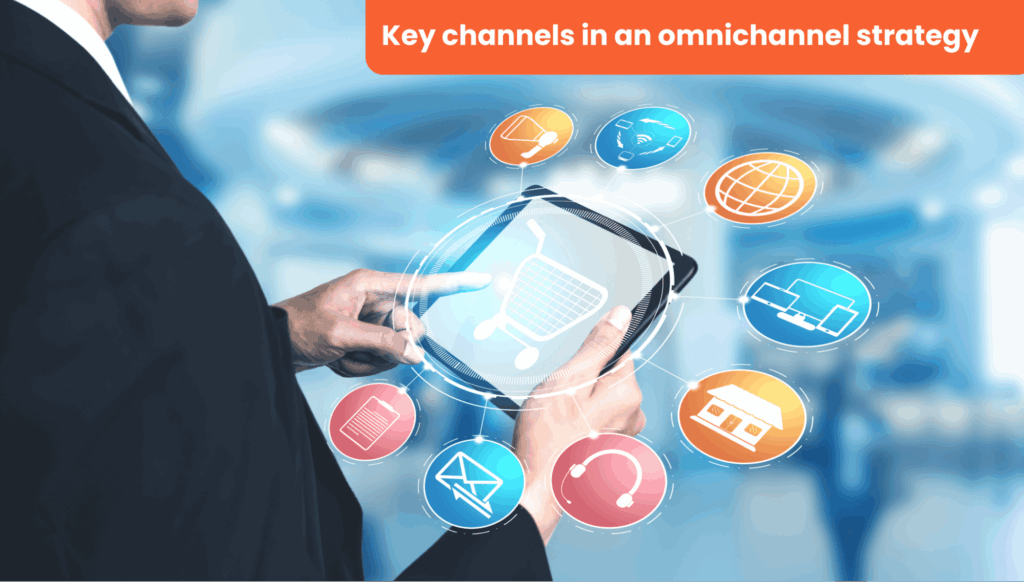
An effective omnichannel support system is built on the right mix of customer service channels. Each channel plays a different role, and the trick is knowing when to use which.
Live chat → For quick questions, product guidance, or instant problem-solving while a customer is on your website or app. Outsourced chat teams maintain fast response times and reduce drop-offs.
Phone support → For complex or sensitive issues where customers want a personal touch. Professional agents can handle high call volumes without compromising quality.
Email → For non-urgent queries, order updates, or when customers need a written record.
Social media → For brand engagement, quick replies, and handling customer complaints in public. Outsourced teams can manage multiple platforms simultaneously.
WhatsApp and messaging apps → For personal, casual, and on-the-go support.
Self-service portals → For FAQs, troubleshooting guides, or product tutorials.
Channel selection criteria
Not every business needs all channels. The right mix of omnichannel services depends on:
- Customer preferences (where do your customers usually reach out?)
- Type of business (B2C vs. B2B)
- Complexity of support requests
- Available resources and team size
In short: The goal of omnichannel support isn’t to be everywhere, but to be where your customers are, and to connect those channels into one smooth experience.
Omnichannel customer service examples and case studies of top Indian brand
Omnichannel customer service isn’t just a buzzword, it’s already shaping how leading brands win customers and keep them loyal. Let’s look at some real-world examples where omnichannel services have transformed customer experience.
Nykaa – Blending digital and physical beauty experiences

Nykaa has mastered the art of unifying online and offline shopping.
Virtual try-on: A customer can try lipstick shades digitally on the app, then head to a nearby store to buy the same shade. The in-store experience feels like a natural extension of the app.
Click & collect: Shoppers who don’t want to wait for delivery can order online and pick up from the closest store.
Connected Support: If a query starts online, a store associate can continue handling it. Customers don’t need to repeat themselves, every touchpoint is connected.
👉 The result: A smooth, personalized beauty journey that builds strong customer loyalty.
Lenskart – The clicks-to-bricks pioneer

Lenskart uses a powerful “clicks-to-bricks” strategy to make eyewear shopping flexible.
Omnichannel returns: Buy online, return at any physical store with no awkward “online vs. offline” rules.
Virtual + physical trials: Customers try frames online in 3D, then confirm their choice in-store before buying.
Centralized data: Every customer’s purchase history flows across channels, allowing personalized recommendations.
👉 The result: Customers trust the brand and enjoy convenience without friction.
Tired of disjointed support across channels?
Outsource to AM2PM Support and give your customers a smooth, unified experience every time.
Tata CLiQ – Phygital (physical + digital) shopping at scale

Tata CLiQ blends e-commerce with offline retail through its partner brands.
Cliq & Piq service: Order online, pick up in-store, a perfect “phygital” model that saves time and shipping costs.
Easy returns: Products bought on Tata CLiQ can be returned or exchanged in physical partner stores.
Unified data: A central system ensures consistent recommendations across apps, websites, and stores.
👉 The result: A truly connected marketplace that combines digital speed with offline trust.
Domino’s India – Reinventing pizza delivery
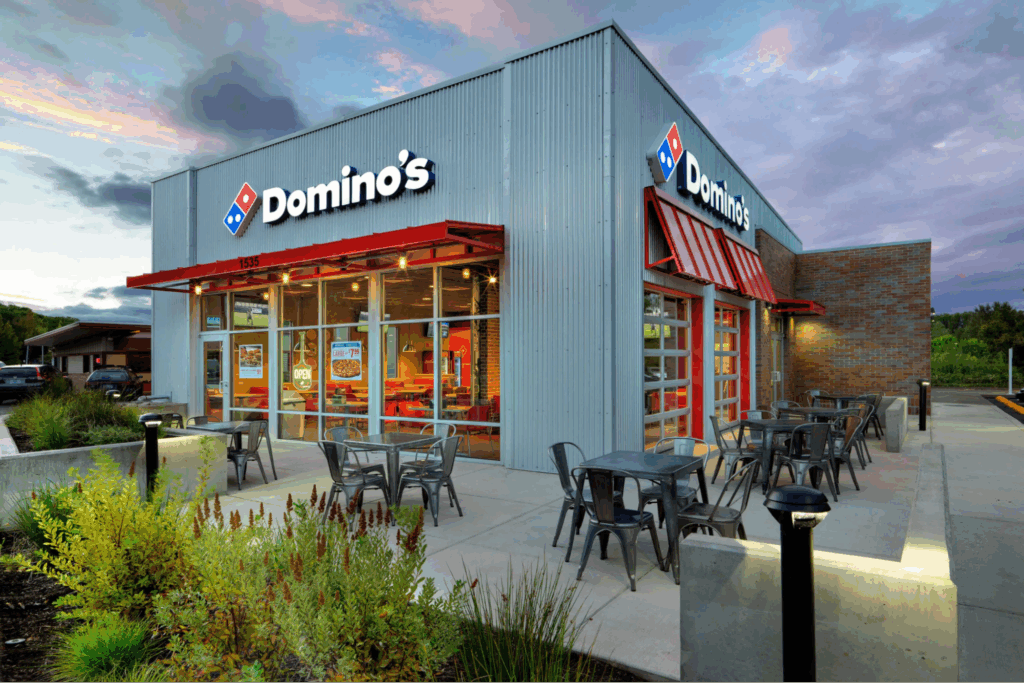
Domino’s shows how food delivery can be omnichannel.
Multiple ordering channels: Customers can order via website, app, call center, or even social media. The experience feels the same everywhere.
Integrated loyalty program: The Domino’s Pizza Mania loyalty program works across all channels. This allows customers to earn and redeem reward points regardless of how or where they place their order.
Real-time tracking: Customers track their pizza delivery in real-time, backed by a system that connects every order channel.
👉 The result: Faster service, stronger loyalty, and consistent brand trust.
HDFC Bank – Banking without boundaries

HDFC proves even traditional industries can go omnichannel.
Branch + digital integration: A customer can start a loan application or transaction on the mobile app and complete it at the branch, no duplication needed.
WhatsApp banking: They’ve launched services on WhatsApp to allow customers perform banking transactions and ask queries directly through the messaging app.
360° customer view: A central system tracks customer interactions across apps, ATMs, and branches, making banking highly personalized.
👉 The result: A modern, seamless banking experience customers now expect as the norm.
As mentioned above, Nykaa, Lenskart, Tata CLiQ, Domino’s India, and HDFC Bank all deliver seamless omnichannel experiences.
These large brands manage it internally because they have the resources and capital to do so. But what about smaller businesses? Today, with omnichannel customer service outsourcing, SMBs can achieve similar results by leveraging expert outsourced teams that efficiently handle multiple channels.
Omnichannel customer service: Step-by-step implementation guide

Implementing an omnichannel customer service strategy is a journey. It requires a careful mix of strategy, technology, people, and continuous improvement. Doing it internally can be time-consuming, resource-heavy, and technically complex. Outsourcing simplifies each step while ensuring consistent quality and efficiency.
Phase 1: Assessment and planning
Map the entire customer journey, analyze current systems, and set clear goals. Outsourced teams bring experience across industries and can quickly identify friction points, inefficient processes, and missed opportunities for improvement.
Phase 2: Technology setup
Choose the right platform, integrate channels, and migrate data safely. External providers handle this end-to-end, ensuring smooth integration without downtime and avoiding the steep learning curve your internal team might face.
Phase 3: Team preparation
Train agents, standardize processes, and manage change. Outsourced agents often come pre-trained on omnichannel best practices, allowing them to manage multiple channels with consistency, speed, and accuracy.
Ready to scale your customer service effortlessly?
With AM2PM Support, get trained agents, integrated systems, and continuous optimization across all channels.
Phase 4: Launch and optimization
Run pilot programs, roll out across all channels, and continuously optimize. Experienced outsourced teams monitor KPIs like response times, First Contact Resolution, and customer satisfaction, making ongoing adjustments to improve efficiency and results.
Seems overwhelming? That’s normal.
This roadmap looks neat on paper, but in practice, it’s resource-intensive. Implementing it internally requires technical expertise, strong project management, and continuous optimization. Partnering with a specialized provider like AM2PM Support gives businesses access to trained agents, integrated systems, and ongoing management, while freeing up internal teams to focus on growth.
Choosing the right technology stack: What business leaders need to know

Setting up omnichannel customer service isn’t just about picking software. It’s about choosing the right mix of tools, platforms, and teams that help your business grow, give customers a great experience, and work well for the long term. Here’s a simple guide to help you make smart choices.
Think business, not just tech
When you look at an omnichannel customer service platform or an outsourcing partner, focus on how it helps your main goals:
- Customer satisfaction: Can it give a smooth, connected experience across all channels?
- Agent productivity: Does it reduce repeated work and let your team solve problems better?
- Scalability: Will the platform or partner grow as your business grows?
- Integration: Does it connect easily with your CRM, marketing tools, and other important systems?
Key questions to ask vendors or partners
- Can multiple channels be combined into one seamless experience?
- How easily does the platform or team work with your existing systems?
- Can they handle conversations across channels without losing context or history?
- Do analytics and reporting tools give a clear view across all channels?
- Does the system use automation or AI to make work easier?
- How is customer data protected, and is it compliant with rules and regulations?
Red flags to watch out for
- Disconnected channels: If chat, email, and phone work separately, it’s not true omnichannel.
- Poor scalability: Platforms or teams that cannot grow with your business will hold you back.
- Limited analytics: Without insights, you won’t know if customer experience or agent efficiency is improving.
- Hidden costs: Extra fees for integrations, more users, or AI features can add up quickly.
Need reliable, multi-channel support without the hassle?
AM2PM Support makes omnichannel customer service simple, cost-effective, and stress-free for your business.
Business takeaway
Picking the right omnichannel customer support solution is about choosing a platform or partner that matches your strategy, boosts efficiency, and grows with your business.”
When done right, your team can focus on what matters most: giving customers a great experience, without struggling with disconnected tools or overworked internal staff.
Best practices and metrics for omnichannel customer service

Running a smooth omnichannel customer service operation is about more than just adding channels, it’s about doing it right and measuring it consistently. Whether in-house or outsourced, following best practices and tracking the right metrics makes all the difference.
Implementation best practices
- Map the customer journey: Identify all touchpoints and friction areas to prioritize improvements.
- Centralize data: Unified systems give agents full context across chat, email, phone, and social channels.
- Empower agents: Well-trained teams provide consistent, personalized support across platforms.
- Use automation wisely: AI and smart routing handle repetitive tasks, freeing agents for complex queries.
- Iterate continuously: Update processes, tools, and training based on feedback and results.
Common mistakes to avoid
- Adding channels without proper integration, creating fragmented experiences.
- Underestimating training needs for multi-channel support.
- Ignoring analytics, leaving inefficiencies unaddressed.
- Attempting full implementation without enough internal resources or expertise.
Measuring success: Key metrics
- First Contact Resolution (FCR): Are issues solved on the first interaction?
- Customer Satisfaction (CSAT): How happy are customers with each touchpoint?
- Average Resolution Time (ART): How quickly are requests resolved?
- Net Promoter Score (NPS): Are customers likely to recommend your brand?
- Revenue Impact & ROI: Are support improvements driving measurable business results?
Outsourcing advantage
Specialized providers already follow these best practices, call center metrics and track KPIs effectively. Outsourced teams come pre-trained, use integrated systems, and follow process-driven workflows, ensuring your customers get a seamless experience while freeing your internal team to focus on growth.
How can your business deliver omnichannel service without breaking a sweat?
Implementing true omnichannel customer service is not just a nice-to-have, it’s essential in today’s competitive market. From reducing customer churn and boosting loyalty to increasing revenue and agent productivity, the benefits are clear.
But doing it all in-house can be resource-heavy, technically complex, and time-consuming. You need the right technology, trained teams, and continuous optimization to make omnichannel work, and not every business has the bandwidth to manage it internally.
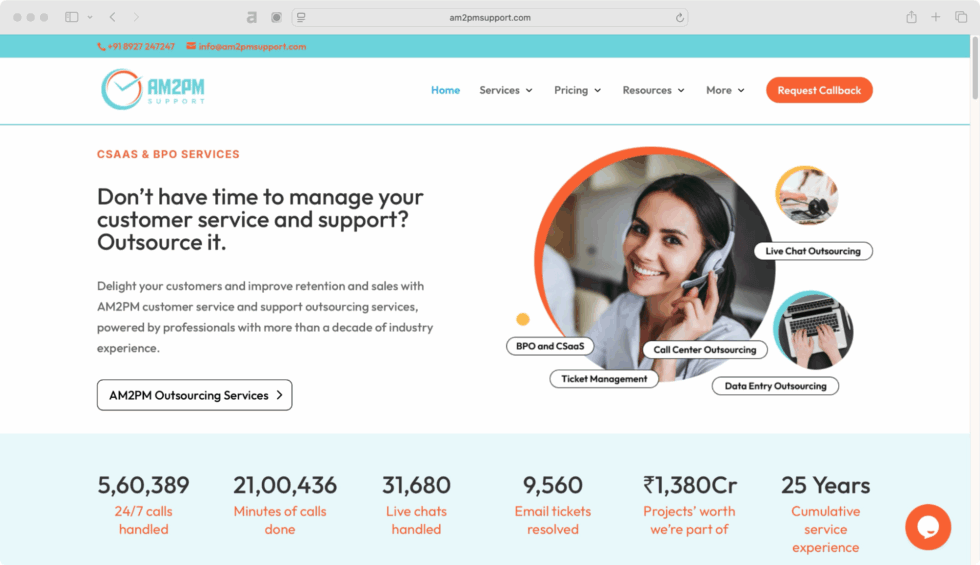
That’s where AM2PM Support comes in. By partnering with a specialized outsourcing provider, you get:
→ Pre-trained, multi-channel agents ready to handle customer queries efficiently.
→ Integrated systems and AI-powered tools that keep conversations connected across channels.
→ Ongoing monitoring and optimization, so KPIs like First Contact Resolution, CSAT, and response times are always improving.
→ Cost and time savings, letting your internal team focus on growth, strategy, and innovation.
Outsourcing your omnichannel customer service with AM2PM Support lets your business deliver a seamless, customer-first experience, without the headaches of managing it all internally.
👉 Ready to transform your customer support and delight every client?
Book a free callback with AM2PM Support and see how we make omnichannel effortless for you 🙂