
Have you ever booked a cab or ordered a ride online?
Now, imagine you do this every day for a week, but something goes wrong each time.
The driver is late, the car is dirty, or the app shows the wrong location. You would feel annoyed and might stop using that service.
This is how customers feel when a company gives bad customer service.
One slow reply, a rude worker, or a confusing process can make the whole experience bad.
Just like ride apps try to make every ride smooth, businesses need clear rules and steps so every customer gets help quickly and easily. When a company doesn’t get it right, and if people notice, they talk about it.
I’ve experienced this myself. After waiting and following up many times with poor customer service, I stopped using the product and even told my friends, “Don’t use this company’s product, their customer service is really bad.”
And I’m not the only one. I bet you’ve done the same, and most customers do too, sharing their frustrations, warning others, sometimes even online. That’s why one bad experience can hurt a business, while good customer service keeps people coming back.
In this blog, I’ll explain what bad customer service is and share 5 ways to spot and fix it, so your customers always have a good experience.
What is bad customer service?

Bad customer service happens when a company doesn’t meet a customer’s expectations. This could be slow replies, rude behavior, confusing steps, or not solving the problem at all.
In simple words: if a customer leaves feeling frustrated, ignored, or upset, that’s bad service.
Some common signs of lack of customer service are:
- Slow responses to emails, calls, or chat messages
- Staff who are rude or don’t help properly
- Different team members giving different answers
- No follow-up after a complaint or request
- Complicated steps for refunds, returns, or cancellations
Even small problems can feel big to customers. In fact, 1 in 3 customers say they would stop buying from a company after just one bad experience. Over time, these small problems can add up and hurt the company’s reputation.
Examples of bad customer service
Customer service can go wrong in many ways. Here are some common life examples, along with why they matter:
Long wait times
- Waiting on hold for 20 minutes or more, only to get transferred multiple times.
- Impact: Over 50% of customers would rather switch to another company than wait that long.
Rude or unfriendly staff
- Agents who interrupt, ignore questions, or talk down to customers.
- Impact: Almost half of customers say rude staff is the main reason they stop buying from a company.
Blaming the customer
- Saying things like, “This isn’t our fault; you must have done something wrong.”
- Impact: Shifts responsibility and frustrates customers instead of solving the problem.
No follow-up
- Promised calls or emails that never happen.
- Impact: 70% of unhappy customers say they won’t return after poor service.
Confusing or broken processes
- Hard-to-understand return policies, malfunctioning websites, or ignored support tickets.
- Impact: Creates frustration and can drive customers straight to competitors.
In retail, this could look like a cashier ignoring you while helping others or refusing a simple return. Online, it might be an unanswered support ticket or a refund that never comes.
Next, I’ll share 5 ways to spot and fix bad customer service.
5 Ways to identify bad customer service and how to fix them (with examples)
As mentioned earlier, one bad experience can make customers leave and tell others about it. The first step to fixing this is noticing the problem and applying solutions. Let’s get started.
Slow response times

Slow response times are one of the most common examples of lack of customer service in India. This happens when businesses take too long to reply to customer inquiries on phone calls, emails, WhatsApp, live chat, or social media. In a competitive market, even small delays can push customers to your competitors.
Customer expectations in India:
- WhatsApp business: Immediate responses
- Email: Within 2–4 hours
- Social media: Within 1 hour during business hours
- Phone: Pick up within 3–4 rings or offer a callback
How to identify slow response times
- Customers complaining about long wait times on social media
- High call abandonment during peak hours
- Multiple follow-ups from the same customer
- Negative reviews mentioning “no response” or “hours of waiting”
- Competitors gaining customers due to faster service
Tired of losing customers to bad service?
AM2PM Support helps you deliver quick, reliable, and friendly support that keeps customers loyal.
Real-life example
Here’s a Reddit complaint from an Amazon India customer:
“The automated phone system is ineffective for anything beyond simple inquiries. Reaching a live representative feels like a game of chance… The callback feature often leads back to the automated system, and even when it connects to an agent, it can take an eternity.”
How to fix slow response times
- Implement multi-channel support:
- WhatsApp business API for instant replies
- Chatbots in regional languages (Hindi, Tamil, Telugu, etc.)
- Callback systems during high-traffic periods
- Live chat with human handover for complex queries
- Optimize for business hours and festivals:
- Extended support hours for different time zones
- Festival-specific staffing (Diwali, Holi, Eid)
- Manage peak hours (1–2 PM lunch, 6–9 PM evenings)
- Use friendly technology:
- Offline support for poor internet areas
- Voice support in regional languages
- SMS-based customer service for basic queries
- Integration with popular apps (PhonePe, Google Pay for payment issues)
- Set specific service levels:
- WhatsApp: reply within 15 minutes during business hours
- Email: within 2 hours
- Phone calls: pick up within 3 rings or provide callback
- Social media: complaints within 30 minutes, general queries within 2 hours
Lack of empathy

Lack of empathy in customer service happens when representatives fail to understand, acknowledge, or respond to customers’ emotions and perspectives. In India, where respect and personal relationships are highly valued, this can be particularly damaging.
Customers expect to be treated with dignity, patience, and understanding, and failing to do so is a classic example of bad customer service.
How to identify lack of empathy
- Not acknowledging a customer’s patience during long wait times
- Dismissive attitude toward urgent or family-related requests
- Inability to understand festival/wedding urgency for quick resolutions
- Lack of respect for senior citizens during support calls
- Ignoring regional differences in communication styles
- Speaking too fast without checking if the customer understands
- Using only English when the customer prefers Hindi or a regional language
- Not apologizing for inconveniences
- Being overly formal or cold in tone
- Failing to acknowledge frustration appropriately
Real-life examples
Priyanka Pal LinkedIn – Urban Company customer service:
“Urban Company… You don’t even care about the issue, neither have you asked me what the complaint is. Such mechanical responses are not helpful at all, rather infuriating!… Having paid Rs. 1200 and being a Plus Member, don’t you think that the least you could do is register my complaint or just take your customer seriously?”
Eva R Sachdeva LinkedIn – Swiggy customer service:
“Swiggy, your customer support team is useless! If we receive stale food after waiting 45–60 minutes, and the resolution is just writing a mail to your backend team because your executive cannot initiate a refund, you’re at risk of losing long-term customers quickly.”
How to fix lack of empathy
1. Implement comprehensive empathy training
- Emotional intelligence workshops to recognize customer emotions
- Role-playing exercises with real customer scenarios
- Active listening techniques for genuine engagement
- Empathy mapping to understand customer perspectives
- Regular refresher training to prevent empathy fatigue
2. Use the H.E.A.R.D. method
- Hear: Let customers fully express their concerns
- Empathize: Acknowledge their feelings genuinely
- Apologize: Say sorry for their experience (without admitting fault)
- Respond: Provide specific solutions
- Diagnose: Follow up to ensure satisfaction
3. Develop empathy statements and scripts
- Communicating understanding:
- “I can understand how frustrating that must be”
- “If I were in your situation, I would feel the same way”
- “I’m truly sorry you’ve had to deal with this”
- Taking action:
- “Let me see what I can do to make this right”
- “I’m going to work with our team to resolve this for you”
- “I appreciate your patience while we figure this out together”
One bad experience can cost you a customer.
AM2PM Support makes sure every interaction counts with quick, caring, and consistent service.
4. Create a customer-centric culture
- Hire for empathy by screening for emotional intelligence
- Reward empathetic behavior in performance reviews and recognition programs
- Share positive feedback highlighting empathetic service
- Lead by example – management should model empathetic communication
5. Address agent burnout and empathy fatigue
- Provide mental health support and stress management resources
- Rotate difficult cases among team members
- Limit consecutive tough interactions through smart call routing
- Offer regular breaks and recovery time
- Create peer support programs for agents
6. Use technology to support empathy
- Customer history tools so agents understand context before calls
- Sentiment analysis to flag emotional customers needing special attention
- Coaching dashboards tracking empathy metrics
- Real-time guidance suggesting empathetic responses
India-specific empathy strategies
- Address customers with proper titles (Sir/Madam, ji)
- Acknowledge family impact when relevant (“I hope this hasn’t affected your family function”)
- Respect religious/cultural constraints (“I understand you need this resolved before Diwali”)
- Show patience with less tech-savvy customers
- Build a “customer is family” mindset, not just “customer is king”
- Reward agents who demonstrate cultural empathy
- Share success stories highlighting respectful, empathetic service
- Lead by example – management modeling Indian cultural values
Inconsistent information

Inconsistent information occurs when customers receive different answers about policies, pricing, delivery timelines, or procedures from different representatives or channels. In India, where customers often verify information multiple times before making decisions, this can be especially frustrating and is a common example of bad customer service.
How to identify inconsistent information
Look for these signs that information provided to customers is inconsistent:
- Customers complaining about receiving different answers from different agents
- Multiple escalations for the same issue due to conflicting information
- Customers asking to “verify” what previous agents told them
- High callback rates as customers seek clarification
- Agent confusion during handoffs or transfers
- Social media complaints about mixed messages
Common areas of inconsistency:
- Policy interpretation: Different explanations of rules or procedures
- Product information: Varying descriptions of features, pricing, or availability
- Process timelines: Different estimated resolution times
- Escalation procedures: Unclear paths for issue resolution
- Refund/return policies: Conflicting explanations across channels
- Pricing and discounts: Differences between app, website, and phone
- Delivery timelines: Conflicting info between customer service and tracking systems
- Payment options: Differences between advertised and actual options
- Regional availability: Confusion about which products/services are offered where
Real-life examples
Reddit Example – AJIO customer service inconsistency:
“The company can just claim they had sent a correct product and easily close the complaint… They sent me used ladies pants instead of men’s trousers. It came in a sealed bag. They refused to take it back and said they did their investigation and they sent me the correct product.”
Another Reddit example is for Myntra
“Tweet about it tagging their CEO, their marketing head, Mr. Ambani also. Did the same for Myntra. Ladies shirt delivered instead of men’s jacket, about 2k price differential, refused to take return (after sharing pics), closed case. Straightaway tweeted, within 2 hrs someone was on the phone with me, got replacement in 2 days.”
Reddit Example – Flipkart inconsistent information:
“I ordered a laptop from Flipkart on 8th. It was supposed to be delivered on 11th, but was never delivered till 14th. They don’t provide any kind of proactive information… The customer care is still sending extending resolution time by one more day even after the amount was refunded.”
Reddit Example – Flipkart delivery confusion:
“Customer support calls for the sake of calling 5 times just to disturb me while I am working without doing anything about the clear scams bad practices done by delivery persons… They kept calling and harassing that I am supposed to go to an unknown location and collect the order.”
Don’t let poor service hurt your brand.
AM2PM Support provides professional, respectful, and consistent customer care every time.
How to fix inconsistent information
1. Create unified information systems
- Maintain a single source of truth for all policies, updated in real-time
- Regional pricing databases synced across all channels
- Multilingual knowledge bases for accurate translations
- Real-time inventory and delivery tracking
2. India-specific training and processes
- Train agents on regional policy variations
- Festival-season procedures for temporary policy changes
- Consistent escalation paths for complex queries
- Cultural context training to explain policies appropriately
3. Technology solutions for the indian market
- Integrate with local logistics partners for accurate delivery info
- Real-time price matching across online and offline channels
- Automated alerts when policies change, especially during sales
- Voice-based information systems in regional languages
4. Quality assurance specific to India
- Mystery shopping across regions and languages
- Cross-channel consistency audits (app, website, phone, WhatsApp)
- Regular training updates during festival seasons
- Customer feedback analysis to identify consistency issues in regional languages
Unresolved problems

Unresolved problems happen when customer issues remain open, partially addressed, or completely ignored, even after multiple attempts to get help. This is one of the most damaging forms of poor customer service, because it directly affects a customer’s ability to use your product or service.
Customers invest time and energy explaining their problems, only to be left without solutions or clear next steps.
How to identify unresolved problems
Key indicators:
- Multiple tickets for the same issue
- Extended resolution times beyond established SLAs
- Customer callbacks asking for updates
- Escalation requests due to lack of progress
- Complaints marked as “resolved” without actual solutions
- Social media complaints about ongoing problems
System warning signs:
- High repeat contact rates for the same issues
- Low First Call Resolution (FCR) scores
- Increasing average handle time due to unresolved cases
- Agent notes showing “pending” status for long periods
- Declining customer satisfaction scores after initial interactions
- Customers escalating to consumer forums (e.g., consumerhelpline.gov.in)
- Multiple tickets for simple issues like refunds or address changes
- Word-of-mouth complaints in local communities
Real-life examples
Blinkit – Fraudulent complaint resolution:
“I submitted twelve separate complaints on the official Consumer Helpline portal. Each time, they fraudulently marked them as ‘resolved,’ referencing an unresolved complaint. This is not just poor customer service; it’s a clear case of willful misconduct.”
OYO – Delayed refund resolved via consumer helpline:
“I booked an OYO room, but upon arrival, check-in was denied. Multiple calls and emails to support didn’t help. I filed a complaint on consumerhelpline.gov.in. Within 24 hours, I received a refund, a call from OYO, and email confirmation. This website worked when the company didn’t.”
Has your customer got frustrated with unanswered calls or chats?
AM2PM Support offers 24/7 coverage so your customers always feel heard and valued.
How to fix unresolved problems
1. Create India-specific resolution processes
- Escalation procedures to consumer forums when internal resolution fails
- Regional manager involvement for complex cases
- Family-friendly resolution timings considering Indian work schedules
- Multiple language support for follow-ups and resolution confirmations
2. Implement robust tracking for the Indian market
- Integration with consumer helpline portals for transparency
- SMS/WhatsApp updates in customers’ preferred languages
- Festival/holiday-aware deadlines adjusted to the Indian calendar
- Family contact options if the primary contact is unavailable
3. Empower agents with authority in India
- Higher monetary limits for instant refunds or compensation
- Festival-season flexibility for policy exceptions
- Cultural understanding to make appropriate on-the-spot decisions
- Direct escalation paths to senior management for urgent cases
4. Address systemic issues in Indian operations
- Regional logistics improvements for common delivery issues
- Seasonal capacity planning for festival shopping periods
- Local vendor relationship management to prevent recurring problems
- Proactive communication during monsoons, festivals, or regional disruptions
Ignoring customer feedback

Ignoring customer feedback happens when a business does not listen to or act on what customers say. This could be unanswered reviews, surveys, social media comments, or messages. Even collecting feedback but not making any changes counts as ignoring it.
In India, where relationships matter a lot, ignoring feedback can seem disrespectful. It tells customers their opinions don’t matter and can make them lose trust in the company.
How to identify ignoring customer feedback
Observable signs:
- 72% of customers report never hearing back after completing surveys
- Unanswered reviews on Google, Yelp, or other platforms
- Social media comments left without response for days or weeks
- Email feedback unacknowledged with no confirmation of receipt
- Repeat complaints about the same issues with no improvements implemented
Internal warning signals:
- No feedback collection systems in place
- Feedback data sitting unused in spreadsheets or databases
- No process to distribute feedback to relevant departments
- Teams unaware of what customers are saying about their work
- Management not reviewing customer sentiment regularly
Customer behavior changes:
- Decreased engagement with brand communications
- Reduced repeat purchases from previously loyal customers
- Negative word-of-mouth spreading about unresponsiveness
- Customers switching to more attentive competitors
- Public complaints about being ignored
Indian market warning signs:
- Unanswered Google My Business reviews (important for local businesses)
- Ignored social media complaints on Facebook, Twitter, Instagram
- Unaddressed feedback on consumer portals like Mouthshut or Trustpilot India
- WhatsApp messages left unread or acknowledged but unresolved
- Festival-season complaints not prioritized despite urgency
Real-life examples
Reddit Example – Swiggy ignoring escalation feedback:
“Avoid Swiggy. They don’t care about customer complaints. They turn away most of the complaints by saying ‘we have taken your feedback and will investigate and make sure never happen’ usual template, nothing about compensation… does anyone knows ways to escalate this issue further for wasting my time (more through this escalation), wrongful updates, incorrectly mark as delivery etc.”
Reddit Example – Paytm customer service ignoring updates:
“Why Paytm Customer care is so Dogshit? I’m so tired of being unable to update my mobile number in my Paytm Payments bank. I’ve raised queries, chatted with the virtual assistant and when I come back after a few hours… it just says ‘the query is resolved’ and my mobile number doesn’t change.”
Reddit Example – Indian bank staff ignoring complaints:
“Is there a way for me to file a complaint against that staff member? He behaved as though he was above everyone else and was quite rude throughout the entire ordeal… Indian Bank: Where closing an account is a full-time job.”
Want to turn complaints into happy customers?
With AM2PM Support, problems turn into opportunities for building trust and loyalty.
How to fix ignoring customer feedback
1. Create a multi-channel feedback system
- Google My Business response protocol for local discovery
- WhatsApp Business feedback collection with automated acknowledgments
- Regional language feedback forms on website and app
- Integration with consumer portals for unified response management
- Festival feedback campaigns to proactively gather seasonal insights
2. Implement specific response protocols
Response examples:
- Positive Feedback:
“Thank you ji, [Name]. We’re happy our service met your expectations. Your family’s satisfaction means everything to us.” - Negative Feedback:
“We sincerely apologize, [Name] ji. We understand this caused inconvenience to you and your family. Here’s what we’re doing immediately…” - Festival-Related Issues:
“We understand this needs to be resolved before [Diwali/Eid/Wedding]. Here’s our immediate action plan…”
3. Act on feedback with cultural sensitivity
- Consider family impact when implementing changes
- Analyze regional preferences for location-specific improvements
- Prioritize festival-season, time-sensitive feedback
- Integrate community feedback for joint family decisions
- Run “You said, we did” campaigns in regional languages
4. Create a feedback-driven culture in India
- Integrate customer feedback into regional expansion decisions
- Prioritize festival-season insights for product development
- Train employees on the importance of Indian customer relationships
- Engage with local communities based on area-specific feedback
- Celebrate positive feedback in company communications
5. Use technology for scalable feedback management
- Automated routing of feedback in regional languages to the right teams
- Sentiment analysis in Hindi and regional languages
- Integration with popular Indian review platforms
- WhatsApp-based follow-ups with rich media responses
- Voice feedback options for customers uncomfortable with typing
6. Address negative feedback proactively
- Respond publicly on social media with cultural sensitivity
- Resolve issues privately while respecting family and community norms
- Perform community damage control for local reputation impact
- Communicate systemic improvements transparently
- Invite customers to visit or call for personal resolution (important in Indian context)
Turn negative customer service into an opportunity
Every bad customer service experience is also a chance to learn and improve. Slow replies, rude staff, confusing information, unresolved problems, or ignored feedback can frustrate your customers, but all these also show where your business can get better.
Companies that notice these problems and fix them quickly don’t just correct mistakes, they earn trust and loyalty, and even get an edge over competitors.
Think about it: a customer who had a problem but sees it solved quickly and kindly may remember your brand more positively than someone who never had a problem at all. Turning frustration into a helpful, caring experience can create fans instead of complaints.
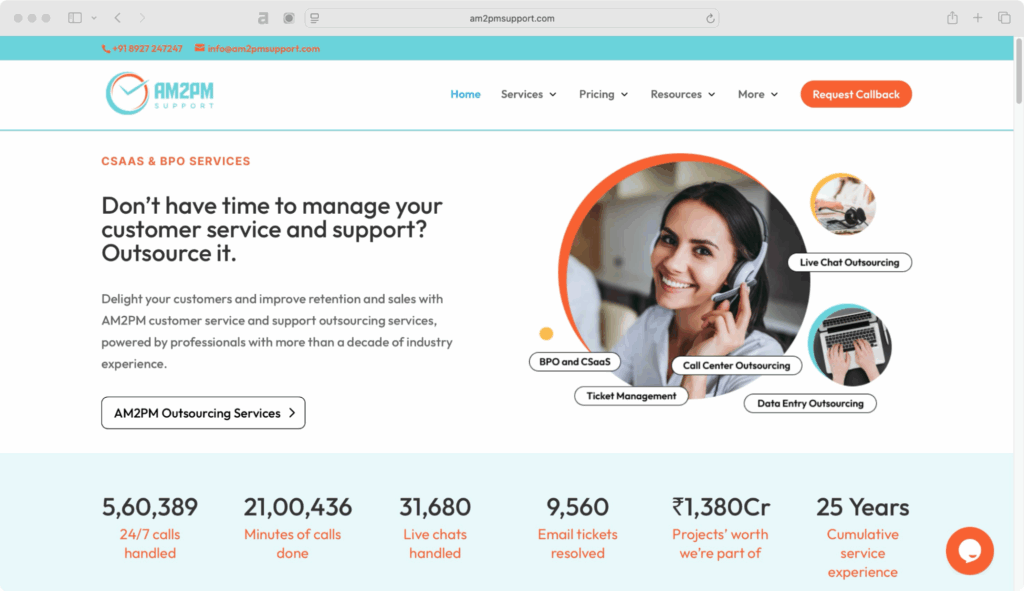
This is where AM2PM Support helps. We provide fast, friendly, and culturally aware support across WhatsApp, live chat, phone, and social media. We make sure every question is heard, understood, and solved. With our India-focused approach, customers feel valued and respected, turning possible complaints into happy, loyal customers.
Remember: the worst service doesn’t have to hurt your brand. By spotting problems, fixing them, and giving consistent, thoughtful support, you can turn challenges into opportunities. With the right help, every customer interaction can count.
???? Ready to vanish your poor customer service? Let’s talk about how AM2PM Support can help you.
???? Book your free callback today!